Fact families, explained
Updated 2026-07-08 · MathSheetLab guides
Three numbers, four facts
A fact family is three numbers locked in a relationship. Take 3, 4 and 12: from just those you get 3×4 = 12, 4×3 = 12, 12÷3 = 4 and 12÷4 = 3. Addition families work identically (3, 4, 7: two sums, two differences). The teaching win is economy — learn one triangle, own four facts.
Why triangles beat lists
Fact-family triangles put the "whole" number at the top and the two parts at the bottom corners. Cover any corner and the other two demand the missing one back. This is subtraction and division taught as missing-number puzzles rather than new operations — which is truer to the math and far less frightening.
Using them with the charts
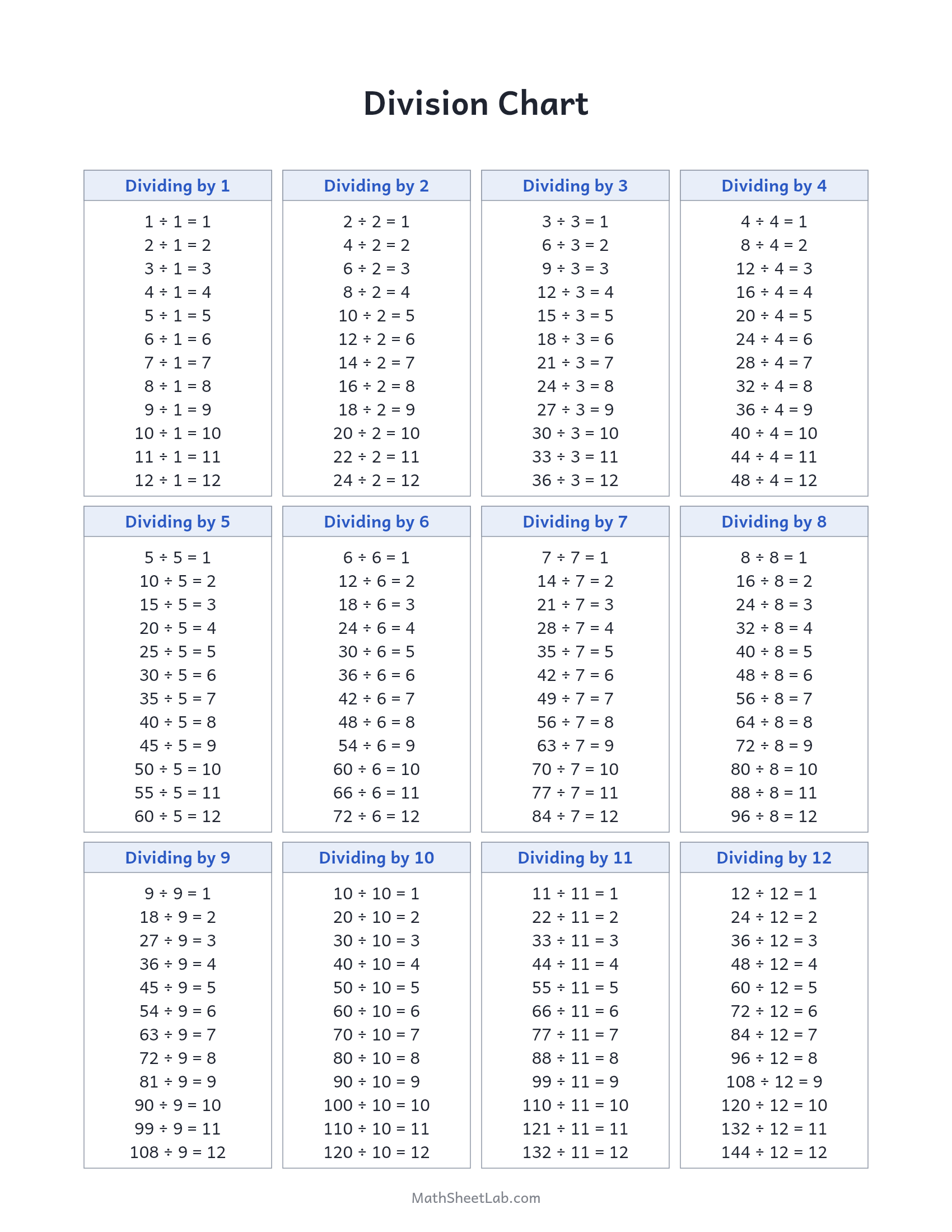
On the multiplication chart, a family is a rectangle: row 3 column 4 and row 4 column 3 land on the same 12. On the division chart, the same family appears written out both ways (12÷3 and 12÷4). Bouncing one family across both charts until the child can produce all four facts unprompted is a complete lesson in itself.