How to teach multiplication facts
Updated 2026-07-08 · MathSheetLab guides
Shrink the problem first
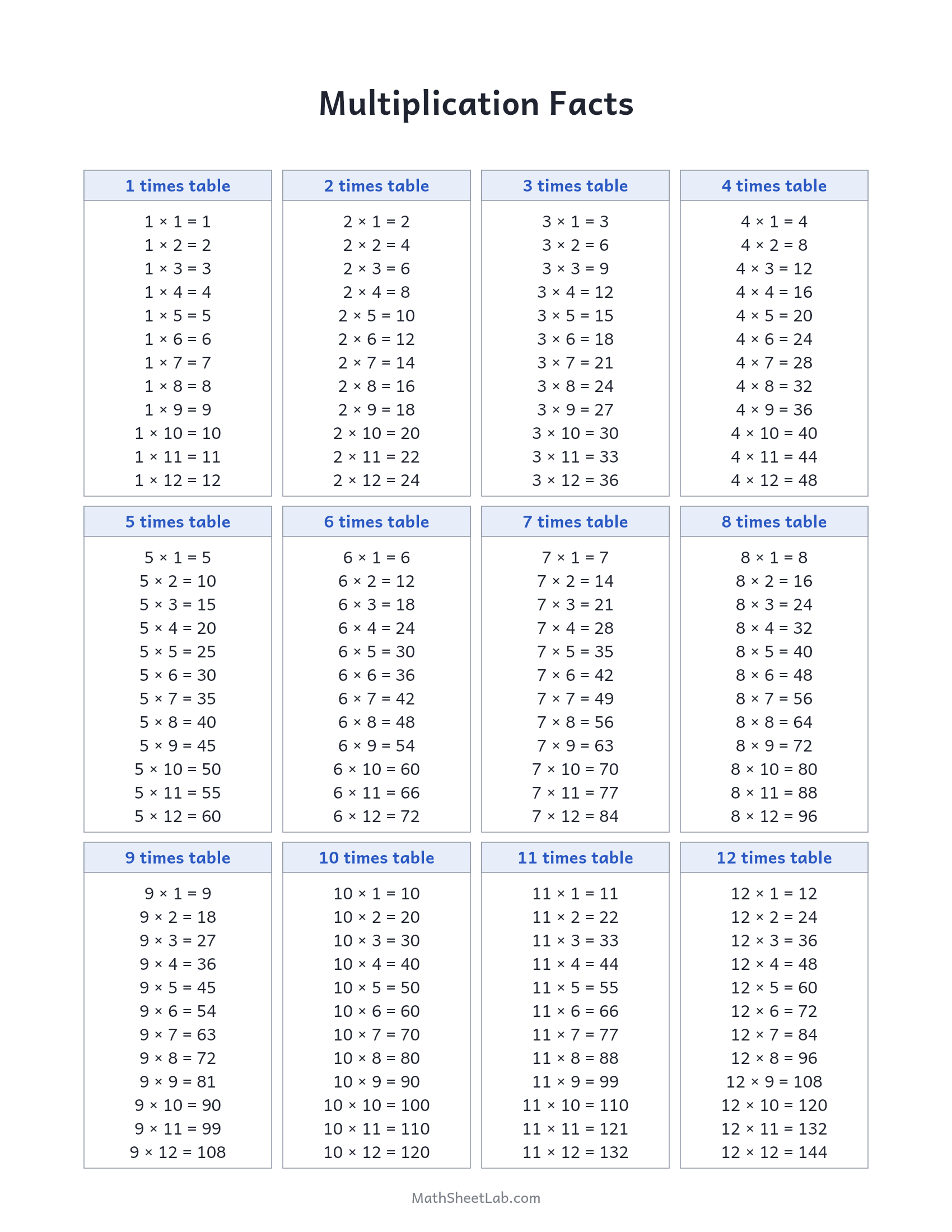
A 12×12 grid holds 144 facts, and that number frightens kids and parents alike. But the 1s are identity, the 10s are place value, and every fact has a mirror (4×9 = 9×4). Strike those out and roughly forty genuinely new facts remain — mostly living in the 6s, 7s and 8s. Say this out loud at the start: "you already know most of the chart" is both true and motivating.
An order that works
Teach 2s, 5s and 10s first — they ride on skip counting children already own. Then 3s and 4s (doubling helps: 4× is double-double). Then 6s and squares. The 9s deserve their own week for the patterns: digits sum to nine, and the tens digit is one less than the factor (9×7 = 63). Finish with the stragglers — 7×8 and friends — as a named "hard facts" list; there are fewer than ten of them and kids enjoy hunting the last ones down.
The daily routine (ten minutes)
Recite one current table from the written-out tables sheet. Fill one row of a blank multiplication chart from memory. Finish with a short mixed worksheet — ten to twenty problems from the generator, current table plus all previous ones. Three minutes each, every school day. Fluency is a volume game played in small daily doses, not a cramming game.
When it isn’t sticking
Drop back from recall to structure: build the fact with arrays (3 rows of 7 counters), find it on the chart, say the skip count. Facts stick when they hang on a pattern; a fact that keeps falling out usually never had a pattern attached in the first place.