Hundreds chart
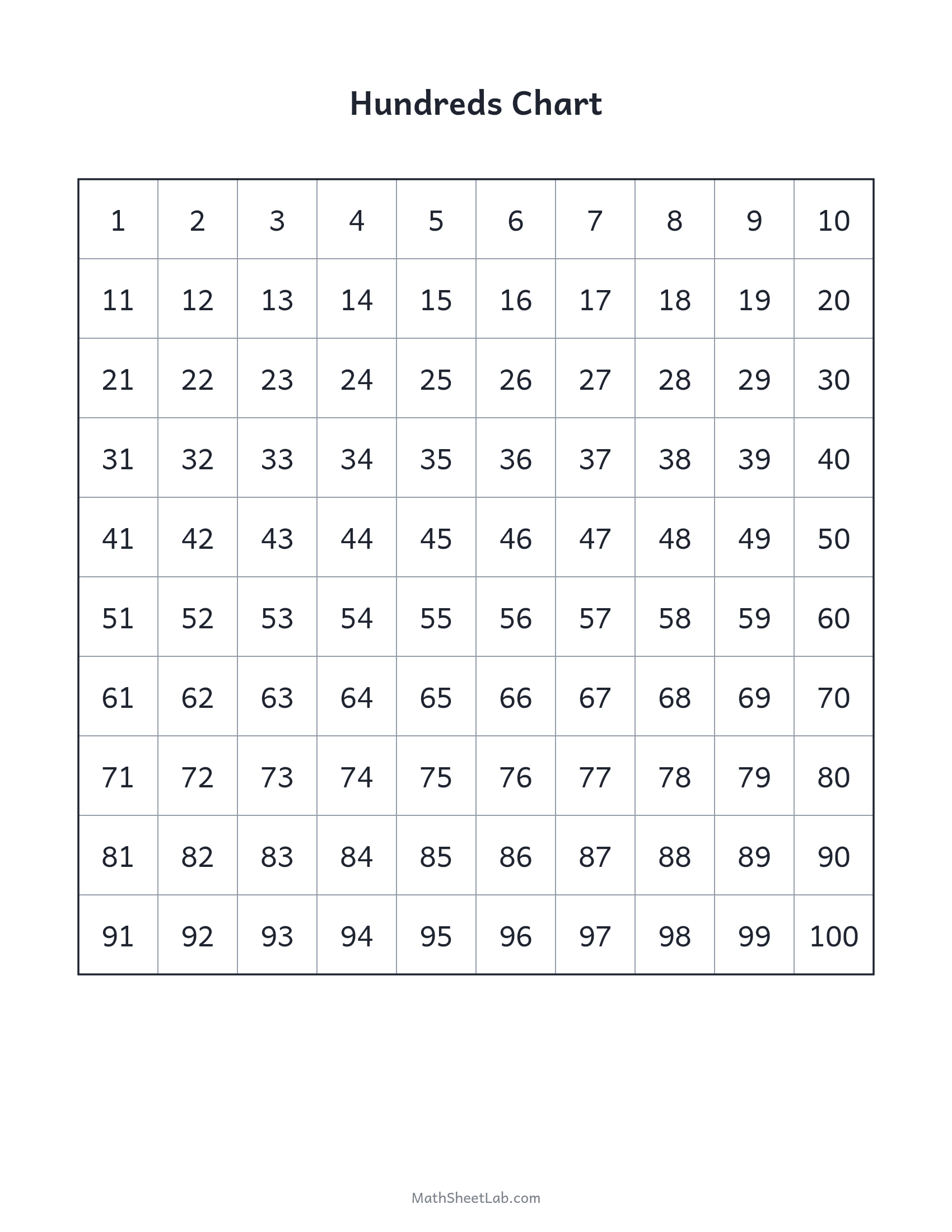
Numbers 1–100 in the classic ten-by-ten grid — the hardest-working chart in any early-years classroom.
How to print it
- Open the print view. Press Print for a clean print-ready view, or download the PDF or PNG below the chart.
- Fit to page. In the print dialog choose “Fit to page” — the chart is laid out for US Letter and scales cleanly onto A4.
- Copy freely. Print or photocopy as many as you need for home, classroom or tutoring use. It is free, with no sign-up.
About the hundreds chart
A hundreds chart puts the number system on one page: rows count by ones, columns count by tens, and every pattern from skip counting to place value becomes something a child can point at. Move one cell right to add 1; move one cell down to add 10 — that single insight carries students from counting into two-digit addition. Use it for counting practice, number hunts, skip-count colouring and "one more, ten more" drills.
Frequently asked questions
What is a hundreds chart used for?
Counting to 100, skip counting, place value, and mental math strategies like adding 10 by moving straight down a column. It is a K–2 staple.
Why does each row end in a ten?
The grid is ten wide, so each row is one full ten: 1–10, 11–20, and so on. That layout is exactly what makes the place-value patterns visible.
Is there a blank version?
Yes — the blank hundreds chart has the same grid with empty cells for students to write the numbers themselves.