Skip counting: the bridge to multiplication
Updated 2026-07-08 · MathSheetLab guides
What skip counting really is
Counting by 2s, 5s or 10s feels like a chant, but it’s multiplication wearing casual clothes: the fives count is the five times table in order. A child who can rattle off 5, 10, 15, 20, 25 already owns half of row five on the multiplication chart — they just don’t know it yet. Making that connection explicit is the whole point.
Practise it where you can see it
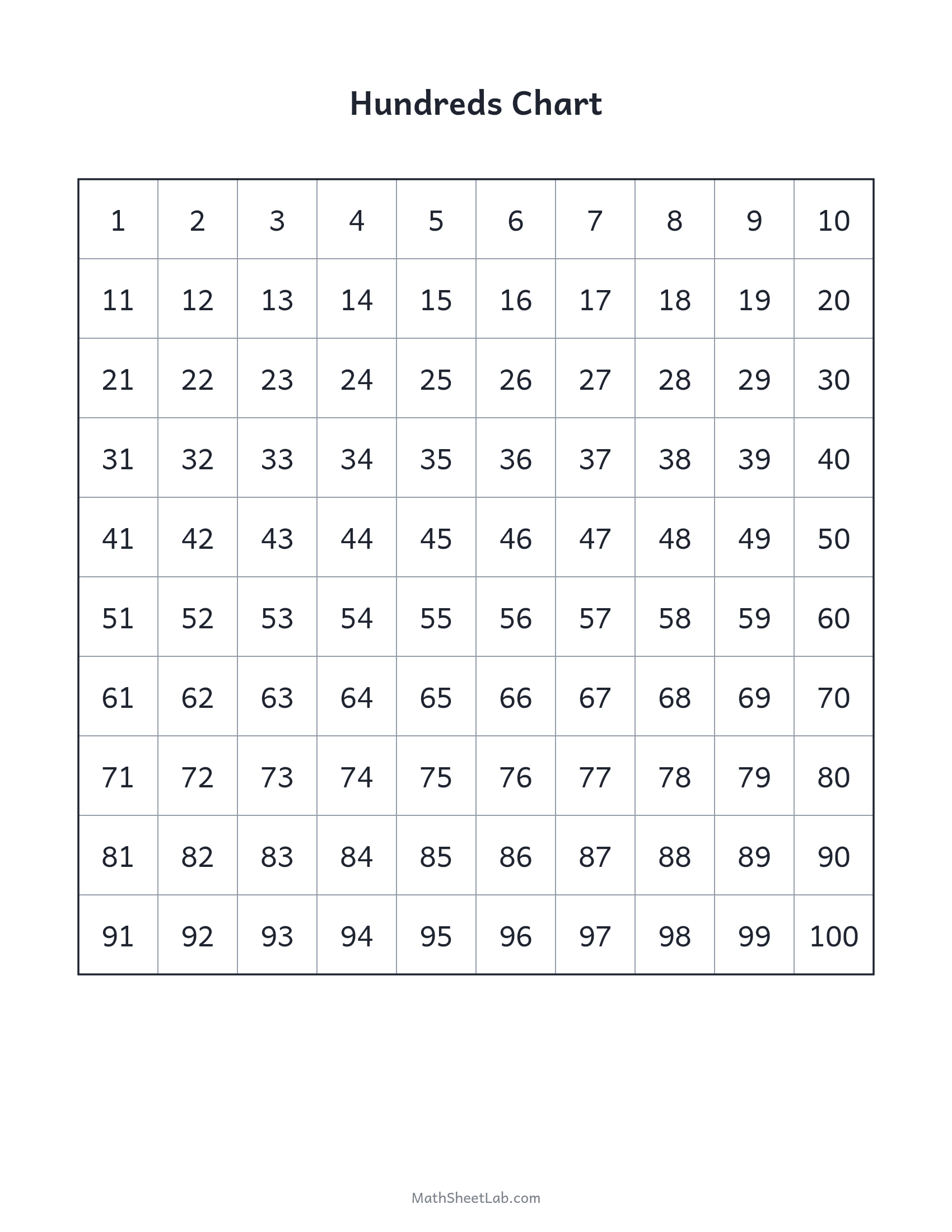
On a hundreds chart, shade every second cell and the evens paint two stripes down the grid; every fifth cell paints two clean columns; every tenth, one column. The visual patterns are the payoff — skip counting isn’t arbitrary, it’s structural, and the chart proves it. (The colouring itself is fun enough that kids don’t notice the drill.)
The progression
10s first (easiest — the right-hand column), then 5s, then 2s. After those: 3s on the chart, which paint a diagonal-ish pattern that takes more attention to see — good. By the time 3s are fluent, announce the secret: "you’ve been doing your times tables all along", and move to the multiplication chart where the same counts live in rows.