What is a ten frame?
Updated 2026-07-08 · MathSheetLab guides
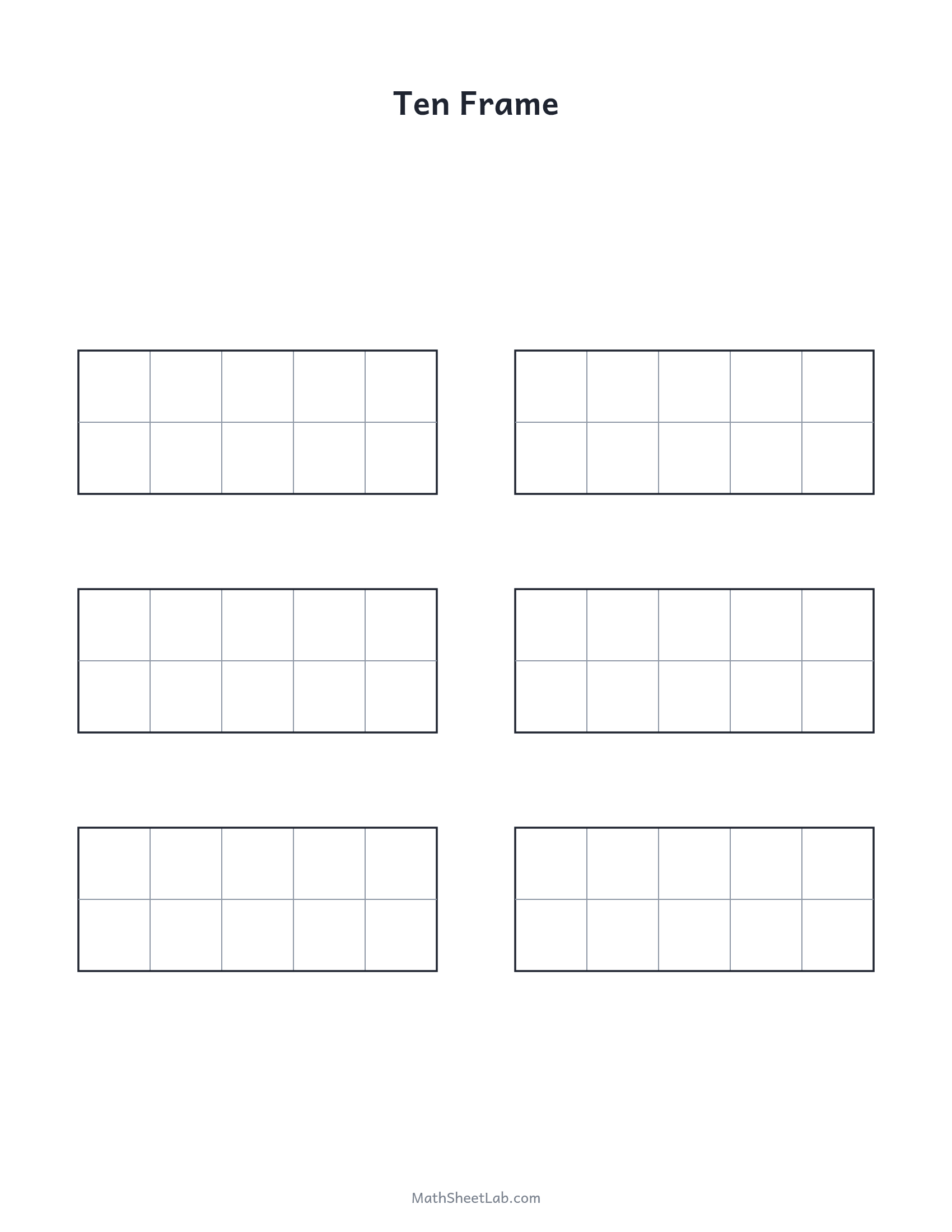
Ten boxes, two rows
A ten frame is nothing but a 2×5 grid of boxes. Its power is the convention: fill the top row first, left to right. Under that rule, every quantity gets a consistent shape — seven is always a full row and two more — and children start recognising quantities at a glance instead of counting one by one. That instant recognition is called subitizing, and it’s the bedrock under all early arithmetic.
Five and some more
Because the rows hold five, the frame silently teaches five-structure: six is "five and one", eight is "five and three". Later, two frames together do the same for ten-structure: thirteen is "a full frame and three". These aren’t tricks — they’re exactly the decompositions that mental addition runs on.
Three ways to use the printable
Show-me: call a number, the child builds it with counters. Flash: show a built frame for two seconds, hide it, ask how many — this forces recognition over counting. Make ten: put seven counters in, ask "how many more to fill it?" That last one is literally the make-a-ten addition strategy, one counter at a time.
When frames are outgrown
When a child sees eight counters and says "eight" without scanning, and can say what eight needs to make ten, the frame has done its job — move the same questions onto the number line and the hundreds chart.